New perspectives on Chinese authoritarianism
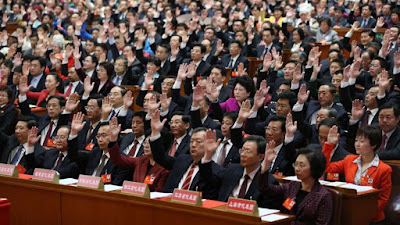
The question of China's political future is an important one and a difficult one. Will China evolve towards a political system that embodies real legal protections for the rights of its citizens and some version of democratic institutions of government? Or will it remain an authoritarian single-party state in which government and the party decide the limits of freedom and the course of economic and social policy? Two recent books are worth reading in this context, and they seem to point to rather different answers. Ya-Wen Lei's The Contentious Public Sphere: Law, Media, and Authoritarian Rule in China makes the case for a broadening sphere of public discourse and debate in China, which seems to suggest the possibility of a gradual loosening of governmental control of thought and action. Wenfang Tang's Populist Authoritarianism: Chinese Political Culture and Regime Sustainability on the other hand makes the case for a distinctive version of populist authoritarianism in Chi...
