Posts

Showing posts with the label regulatory regime

Testing the NRC

Image
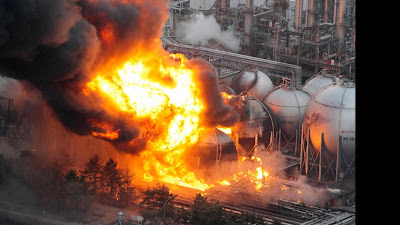
Serious nuclear accidents are rare but potentially devastating to people, land, and agriculture. (It appears that minor to moderate nuclear accidents are not nearly so rare, as James Mahaffey shows in  Atomic Accidents: A History of Nuclear Meltdowns and Disasters: From the Ozark Mountains to Fukushima .) Three Mile Island, Chernobyl, and Fukushima are disasters that have given the public a better idea of how nuclear power reactors can go wrong, with serious and long-lasting effects. Reactors are also among the most complex industrial systems around, and accidents are common in complex, tightly coupled industrial systems. So how can we have reasonable confidence in the safety of nuclear reactors? One possible answer is that we cannot have reasonable confidence at all. However, there are hundreds of large nuclear reactors in the world, and 98 active nuclear reactors in the United States alone. So it is critical to have highly effective safety regulation and oversight of the nuclear...
Soviet nuclear disasters: Kyshtym

Image
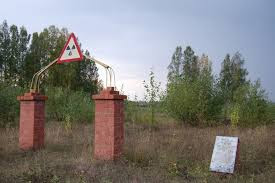
The 1986 meltdown of reactor number 4 at the Chernobyl Nuclear Power Plant was the greatest nuclear disaster the world has yet seen. Less well known is the Kyshtym disaster in 1957, which resulted in a massive release of radioactive material in the Eastern Ural region of the Soviet Union. This was a catastrophic underground explosion at a nuclear storage facility near the Mayak power plant in the Eastern Ural region of the USSR. Information about the disaster was tightly restricted by Soviet authorities, with predictably bad consequences. Zhores Medvedev was one of the first qualified scientists to provide information and hypotheses about the Kyshtym disaster. His book Nuclear Disaster in the Urals was written while he was in exile in Great Britain and appeared in 1980. It is fascinating to learn that his reasoning is based on his study of ecological, biological, and environmental research done by Soviet scientists between 1957 and 1980. Medvedev was able to piece together the extent ...

Regulatory failure and the 737 MAX disasters

Image
The recent crashes of two Boeing 737 MAX aircraft raise questions about the safety certification process through which this modified airframe was certified for use by the FAA. Recent accounts of the design and manufacture of the aircraft demonstrate an enormous pressure for speed and great pressure to reduce costs. Attention has focused on a software system, MCAS, which was a feature needed to adapt to the aerodynamics created by repositioning of larger engines on the existing 737 body. The software was designed to automatically intervene to prevent stall if a single sensor in the nose indicated unacceptable angle of ascent. The crash investigations are not complete, but current suspicions are that the pilots in the two aircraft were unable to control or disable the nose-down response of the system in the roughly 40 seconds they had to recover control of the aircraft. (James Fallows provides a good and accessible account of the details of the development of the 737 MAX in a story i...

The Morandi Bridge collapse and regulatory capture

Image
Lower image: Eugenio Ceroni and Luca Cozzi,  Ponte Morandi - Autopsia di una strage A recurring topic in Understanding Society is the question of the organizational causes that lie in the background of major accidents and technological disasters. One such disaster is the catastrophic collapse of the Morandi Bridge in Genoa in August, 2018, which resulted in the deaths of 43 people. Was this a technological failure, a design failure -- or importantly a failure in which private and public organizational features led to the disaster? A major story in the New York Times on March 5, 2019 ( link ) makes it clear that social and organizational causes were central to this horrendous failure. (What could be more terrifying than having the highway bridge under your vehicle collapse to the earth 150 feet beneath you?) In this case it is evident from the Times coverage that a major cause of the disaster was the relationship between Autostrade per l'Italia, the private company that manages t...

Regulatory failure

Image
When we think of the issues of health and safety that exist in a modern complex economy, it is impossible to imagine that these social goods will be produced in sufficient quantity and quality by market forces alone. Safety and health hazards are typically regarded as "externalities" by private companies -- if they can be "dumped" on the public without cost, this is good for the profitability of the company. And state regulation is the appropriate remedy for this tendency of a market-based economy to chronically produce hazards and harms, whether in the form of environmental pollution, unsafe foods and drugs, or unsafe industrial processes. David Moss and John Cisternino's New Perspectives on Regulation provides some genuinely important perspectives on the role and effectiveness of government regulation in an epoch which has been shaped by virulent efforts to reduce or eliminate regulations on private activity. This volume is a report from the Tobin Project. It...