Posts

Showing posts with the label technology failure

The US Chemical Safety Board

Image
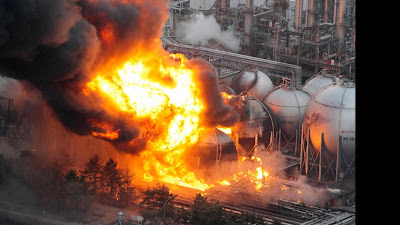
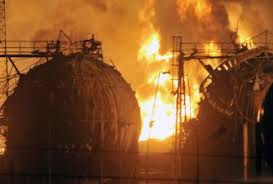
The Federal agency responsible for investigating chemical and petrochemical accidents in the United States is the Chemical Safety Board ( link ). The mission of the Board is described in these terms: The CSB is an independent federal agency charged with investigating industrial chemical accidents. Headquartered in Washington, DC, the agency�s board members are appointed by the President and confirmed by the Senate. The CSB�s mission is to �drive chemical safety change through independent investigation to protect people and the environment.� The CSB�s vision is �a nation safe from chemical disasters.� The CSB conducts root cause investigations of chemical accidents at fixed industrial facilities. Root causes are usually deficiencies in safety management systems, but can be any factor that would have prevented the accident if that factor had not occurred. Other accident causes often involve equipment failures, human errors, unforeseen chemical reactions or other hazards. The agency does ...
Testing the NRC

Image
Serious nuclear accidents are rare but potentially devastating to people, land, and agriculture. (It appears that minor to moderate nuclear accidents are not nearly so rare, as James Mahaffey shows in  Atomic Accidents: A History of Nuclear Meltdowns and Disasters: From the Ozark Mountains to Fukushima .) Three Mile Island, Chernobyl, and Fukushima are disasters that have given the public a better idea of how nuclear power reactors can go wrong, with serious and long-lasting effects. Reactors are also among the most complex industrial systems around, and accidents are common in complex, tightly coupled industrial systems. So how can we have reasonable confidence in the safety of nuclear reactors? One possible answer is that we cannot have reasonable confidence at all. However, there are hundreds of large nuclear reactors in the world, and 98 active nuclear reactors in the United States alone. So it is critical to have highly effective safety regulation and oversight of the nuclear...

Safety and accident analysis: Longford

Image
Andrew Hopkins has written a number of fascinating case studies of industrial accidents, usually in the field of petrochemicals. These books are crucial reading for anyone interested in arriving at a better understanding of technological safety in the context of complex systems involving high-energy and tightly-coupled processes. Especially interesting is his Lessons from Longford: The ESSO Gas Plant Explosion . The Longford refining plant suffered an explosion and fire in 1998 that killed two workers, badly injured others, and interrupted the supply of natural gas to the state of Victoria for two weeks. Hopkins is a sociologist, but has developed substantial expertise in the technical details of petrochemical refining plants. He served as an expert witness in the Royal Commission hearings that investigated the accident. The accounts he offers of these disasters are genuinely fascinating to read. Hopkins makes the now-familiar point that companies often seek to lay responsibility for a...

The 737 MAX disaster as an organizational failure

Image
The topic of the organizational causes of technology failure comes up frequently in Understanding Society . The tragic crashes of two Boeing 737 MAX aircraft in the past year present an important case to study. Is this an instance of pilot error (as has occasionally been suggested)? Is it a case of engineering and design failures? Or are there important corporate and regulatory failures that created the environment in which the accidents occurred, as the public record seems to suggest? The formal accident investigations are not yet complete, and the FAA and other air safety agencies around the world have not yet approved the aircraft for flight following the suspension of certification following the second crash. There will certainly be a detailed and expert case study of this case at some point in the future, and I will be eager to read the resulting book. In the meantime, though, it is  useful to bring the perspectives of Charles Perrow, Diane Vaughan, and Andrew Hopkins to bear ...

Sexual harassment in academic contexts

Image
Sexual harassment of women in academic settings is regrettably common and pervasive, and its consequences are grave. At the same time, it is a remarkably difficult problem to solve. The "me-too" movement has shed welcome light on specific individual offenders and has generated more awareness of some aspects of the problem of sexual harassment and misconduct. But we have not yet come to a public awareness of the changes needed to create a genuinely inclusive and non-harassing environment for women across the spectrum of mistreatment that has been documented. The most common institutional response following an incident is to create a program of training and reporting, with a public commitment to investigating complaints and enforcing university or institutional policies rigorously and transparently. These efforts are often well intentioned, but by themselves they are insufficient. They do not address the underlying institutional and cultural features that make sexual harassment...

System effects

Image
Quite a few posts here have focused on the question of emergence in social ontology, the idea that there are causal processes and powers at work at the level of social entities that do not correspond to similar properties at the individual level. Here I want to raise a related question, the notion that an important aspect of the workings of the social world derives from "system effects" of the organizations and institutions through which social life transpires. A system accident or effect is one that derives importantly from the organization and configuration of the system itself, rather than the specific properties of the units. What are some examples of system effects? Consider these phenomena: Flash crashes in stock markets as a result of automated trading Under-reporting of land values in agrarian fiscal regimes  Grade inflation in elite universities  Increase in product defect frequency following a reduction in inspections  Rising frequency of industrial errors at th...

Philosophy and the study of technology failure

Image
image: Adolf von Menzel,  The Iron Rolling Mill (Modern Cyclopes) Readers may have noticed that my current research interests have to do with organizational dysfunction and largescale technology failures. I am interested in probing the ways in which organizational failures and dysfunctions have contributed to large accidents like Bhopal, Fukushima, and the Deepwater Horizon disaster. I've had to confront an important question in taking on this research interest: what can philosophy bring to the topic that would not be better handled by engineers, organizational specialists, or public policy experts? One answer is the diversity of viewpoint that a philosopher can bring to the discussion. It is evident that technology failures invite analysis from all of these specialized experts, and more. But there is room for productive contribution from reflective observers who are not committed to any of these disciplines. Philosophers have a long history of taking on big topics outside the defi...

System safety

Image
An ongoing thread of posts here is concerned with organizational causes of large technology failures. The driving idea is that failures, accidents, and disasters usually have a dimension of organizational causation behind them. The corporation, research office, shop floor, supervisory system, intra-organizational information flow, and other social elements often play a key role in the occurrence of a gas plant fire, a nuclear power plant malfunction, or a military disaster. There is a tendency to look first and foremost for one or more individuals who made a mistake in order to explain the occurrence of an accident or technology failure; but researchers such as Perrow, Vaughan, Tierney, and Hopkins have demonstrated in detail the importance of broadening the lens to seek out the social and organizational background of an accident. It seems important to distinguish between system flaws and organizational dysfunction in considering all of the kinds of accidents mentioned here. We might s...

What the boss wants to hear ...

Image
According to David Halberstam in his outstanding history of the war in Vietnam, The Best and the Brightest , a prime cause of disastrous decision-making by Presidents Kennedy and Johnson was an institutional imperative in the Defense Department to come up with a set of facts that conformed to what the President wanted to hear. Robert McNamara and McGeorge Bundy were among the highest-level miscreants in Halberstam's account; they were determined to craft an assessment of the situation on the ground in Vietnam that conformed best with their strategic advice to the President. Ironically, a very similar dynamic led to one of modern China's greatest disasters, the Great Leap Forward famine in 1959. The Great Helmsman was certain that collective agriculture would be vastly more productive than private agriculture; and following the collectivization of agriculture, party officials in many provinces obliged this assumption by reporting inflated grain statistics throughout 1958 and 195...