Posts

Showing posts with the label authoritarianism

Shakespeare on tyranny

Image
Stephen Greenblatt is a literary critic and historian whose insights into philosophy and the contemporary world are genuinely and consistently profound. His most recent book returns to his primary expertise, the corpus of Shakespeare's plays. But it is -- by intention or otherwise -- an  important reflection on the presidency of Donald Trump as well. The book is  Tyrant: Shakespeare on Politics , and it traces in fascinating detail the evolution and fates of tyrants through Shakespeare's plays. Richard III gets a great deal of attention, as do Lear and Macbeth. Greenblatt makes it clear that Shakespeare was interested both in the institutions of governance within which tyrants seized power, and the psychology of the tyrant. The parallels with the behavior and psychology of the current US President are striking. Here is how Greenblatt frames his book. �A king rules over willing subjects,� wrote the influential sixteenth-century Scottish scholar George Buchanan, �a tyrant over u...

Populism's base

Image
Steve Bannon may have lost his perch in the White House and Breitbart; but the themes of white supremacy, intolerance, bigotry, and anti-government extremism that drive radical nationalist populism survive his fall. In The New Minority: White Working Class Politics in an Age of Immigration and Inequality Justin Gest attempts to explain how this movement has been able to draw support from white working class men and women -- often in support of policies that are objectively harmful to them. Here is how he describes his central concern: In this book, I suggest that these trends [towards polarization] intensify an underlying demographic phenomenon: the communities of white working class people who once occupied the political middle have decreased in size and moved to the fringes, and American and European societies are scrambling to recalibrate how they might rebuild the centrist coalitions that engender progress. The book makes use of both ethnographic and survey research to attempt to ...

New perspectives on Chinese authoritarianism

Image
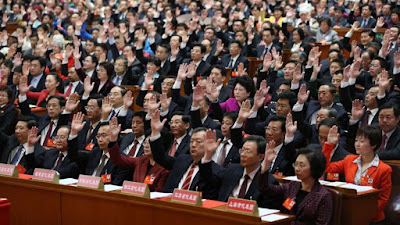
The question of China's political future is an important one and a difficult one. Will China evolve towards a political system that embodies real legal protections for the rights of its citizens and some version of democratic institutions of government? Or will it remain an authoritarian single-party state in which government and the party decide the limits of freedom and the course of economic and social policy? Two recent books are worth reading in this context, and they seem to point to rather different answers. Ya-Wen Lei's The Contentious Public Sphere: Law, Media, and Authoritarian Rule in China  makes the case for a broadening sphere of public discourse and debate in China, which seems to suggest the possibility of a gradual loosening of governmental control of thought and action. Wenfang Tang's Populist Authoritarianism: Chinese Political Culture and Regime Sustainability on the other hand makes the case for a distinctive version of populist authoritarianism in Chi...